
Know it's right. Before you file.
Your name is on the brief, not the AI's, not your associate's. Get a full citation audit before the court does. Built on the framework that outperformed Westlaw Deep Research in legal accuracy tests.
THE PROBLEM
A brief isn't just legal argument; it's dozens of technical requirements that must be perfect before you file. Citations checked. Holdings verified. Statutes current. Local rules followed. Format compliant.
Each one takes time. Each one creates risk. Miss one, and opposing counsel notices. Or worse, the court does.
A single bad citation can cost you sanctions, tank a motion, or get you laughed out of court. The court doesn't care that you were busy. They care that you cited overturned - or worse, hallucinated - law.
Complete verification.
⚖️
Case Law Verification
We go beyond "good law" flags. We verify the logic.
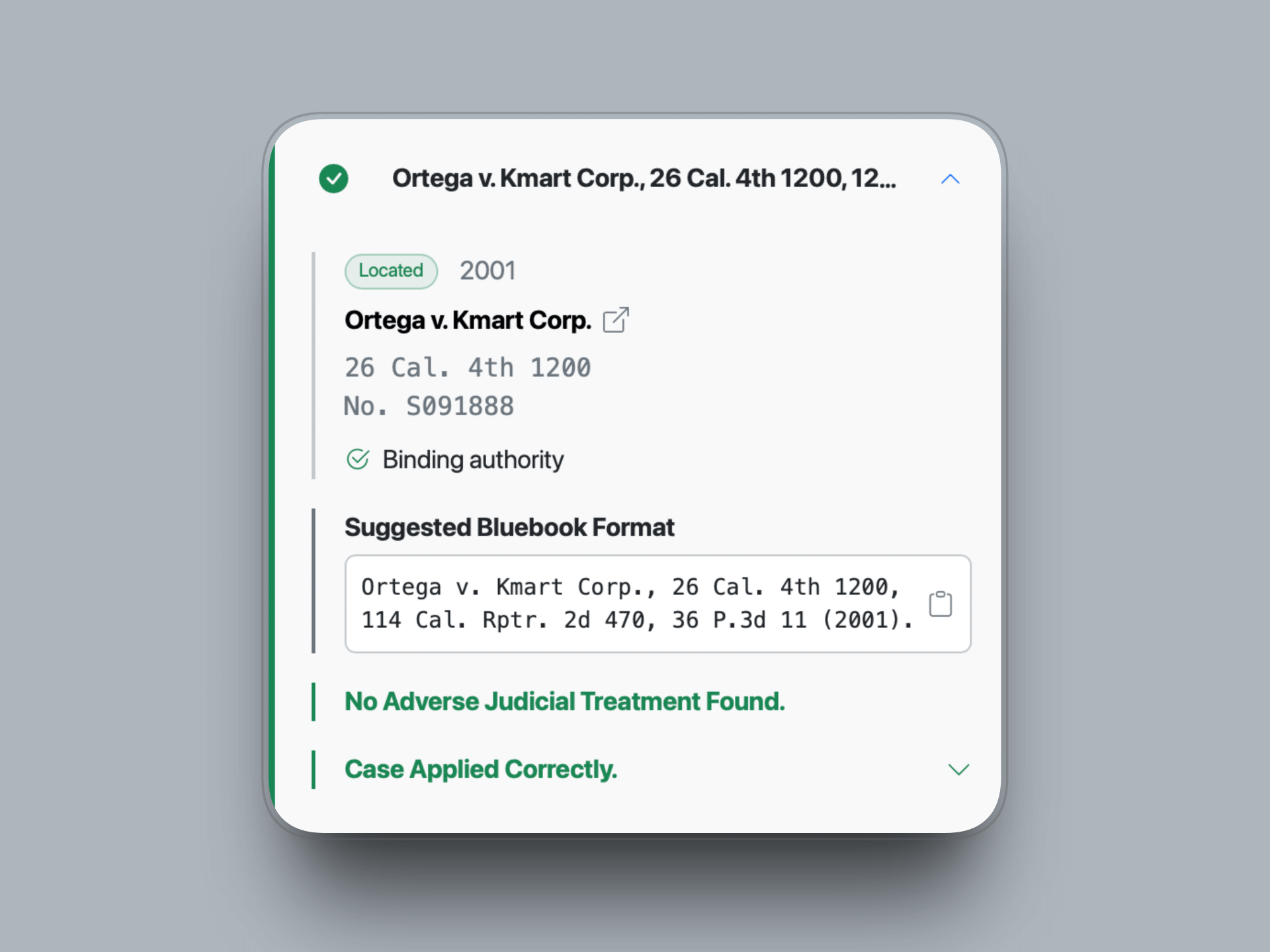
- Is the case real and binding?
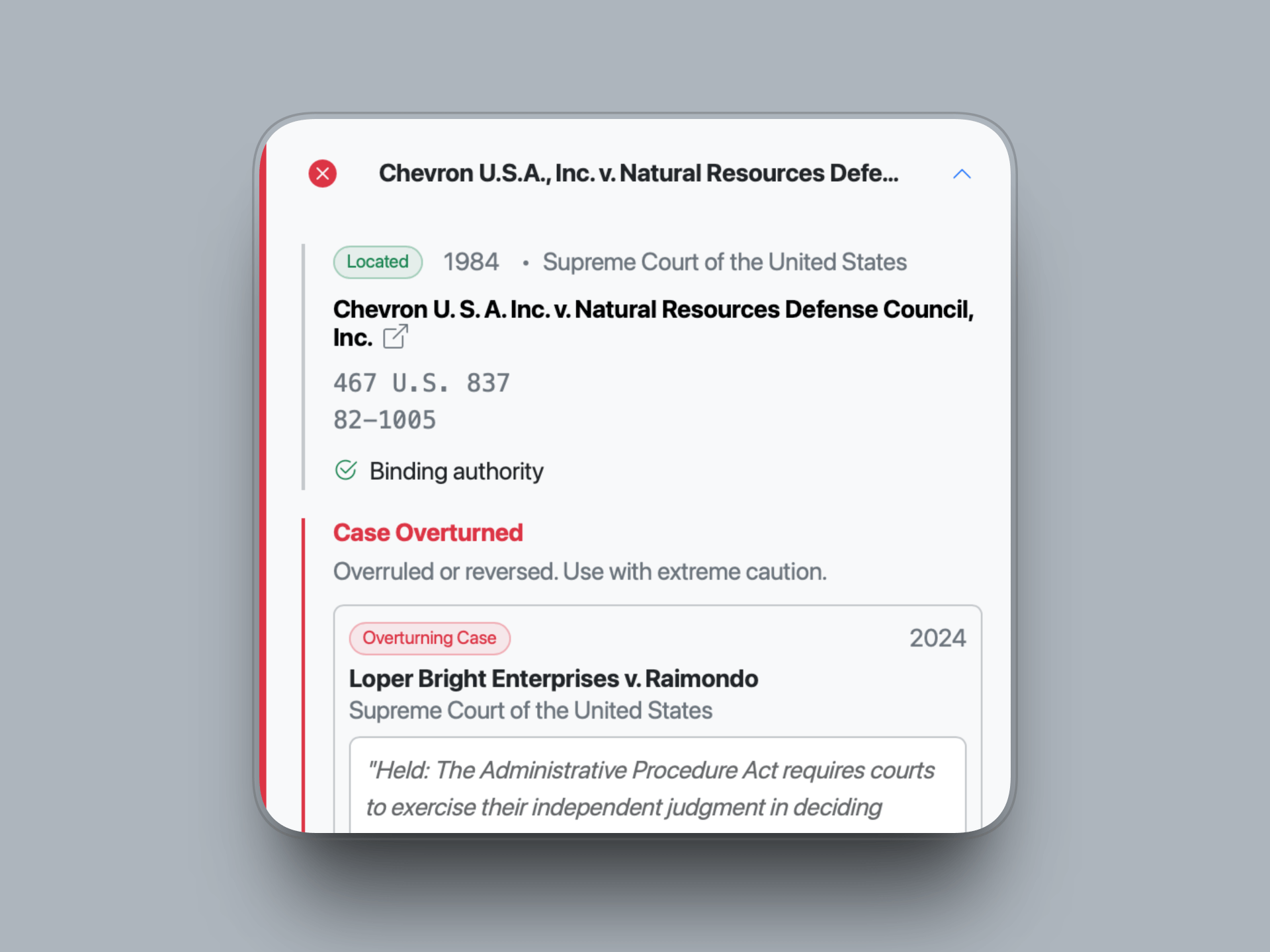
- Has it been overturned or distinguished?
- Does the holding support your proposition?
- Is the citation Bluebook-compliant?
§
Statutory Verification
Ensuring your legislative authority is current.
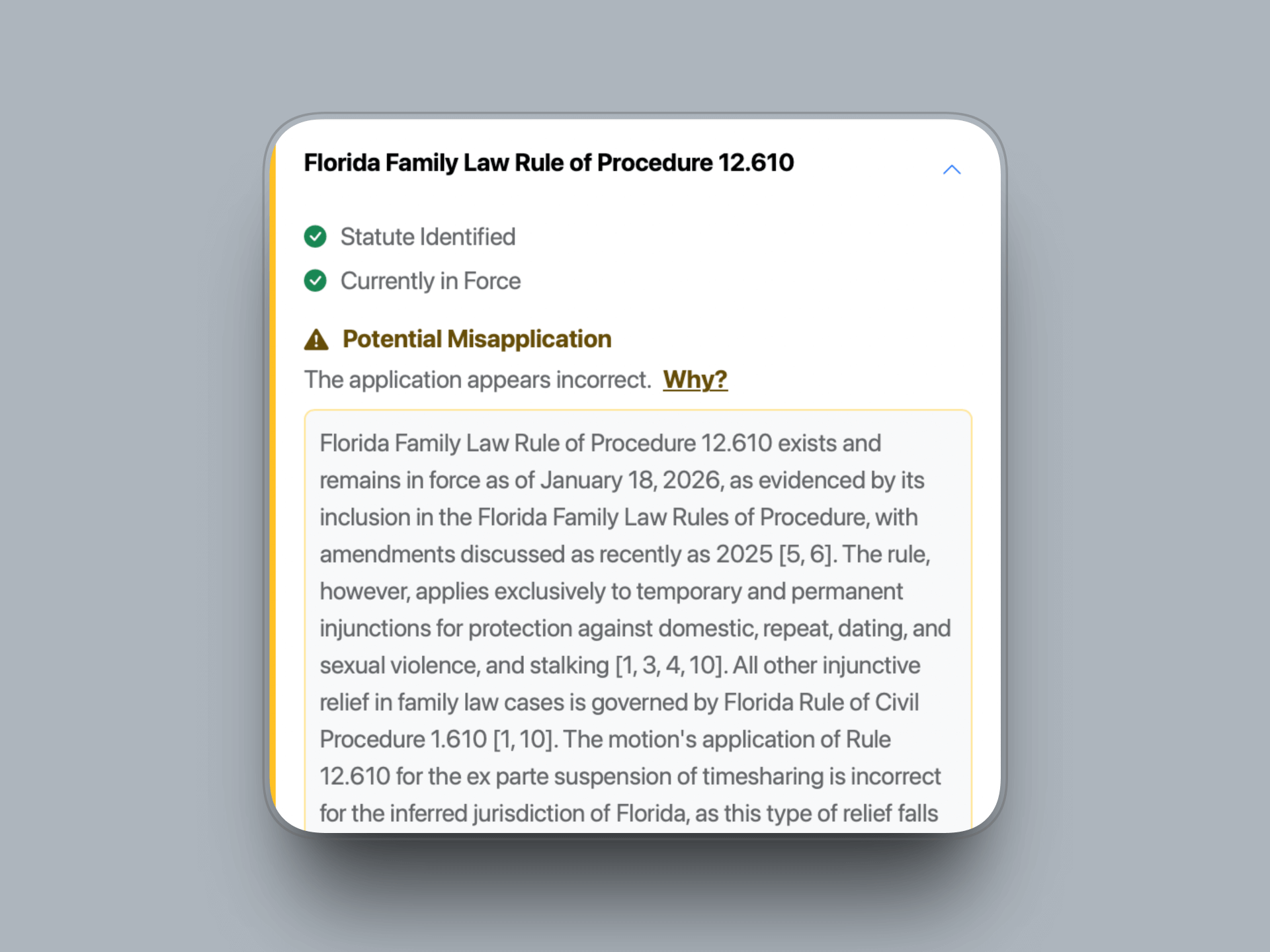
- Does the statute exist?
- Is it still in force?
- Has it been correctly applied?
- Are citation format and names accurate?
✓
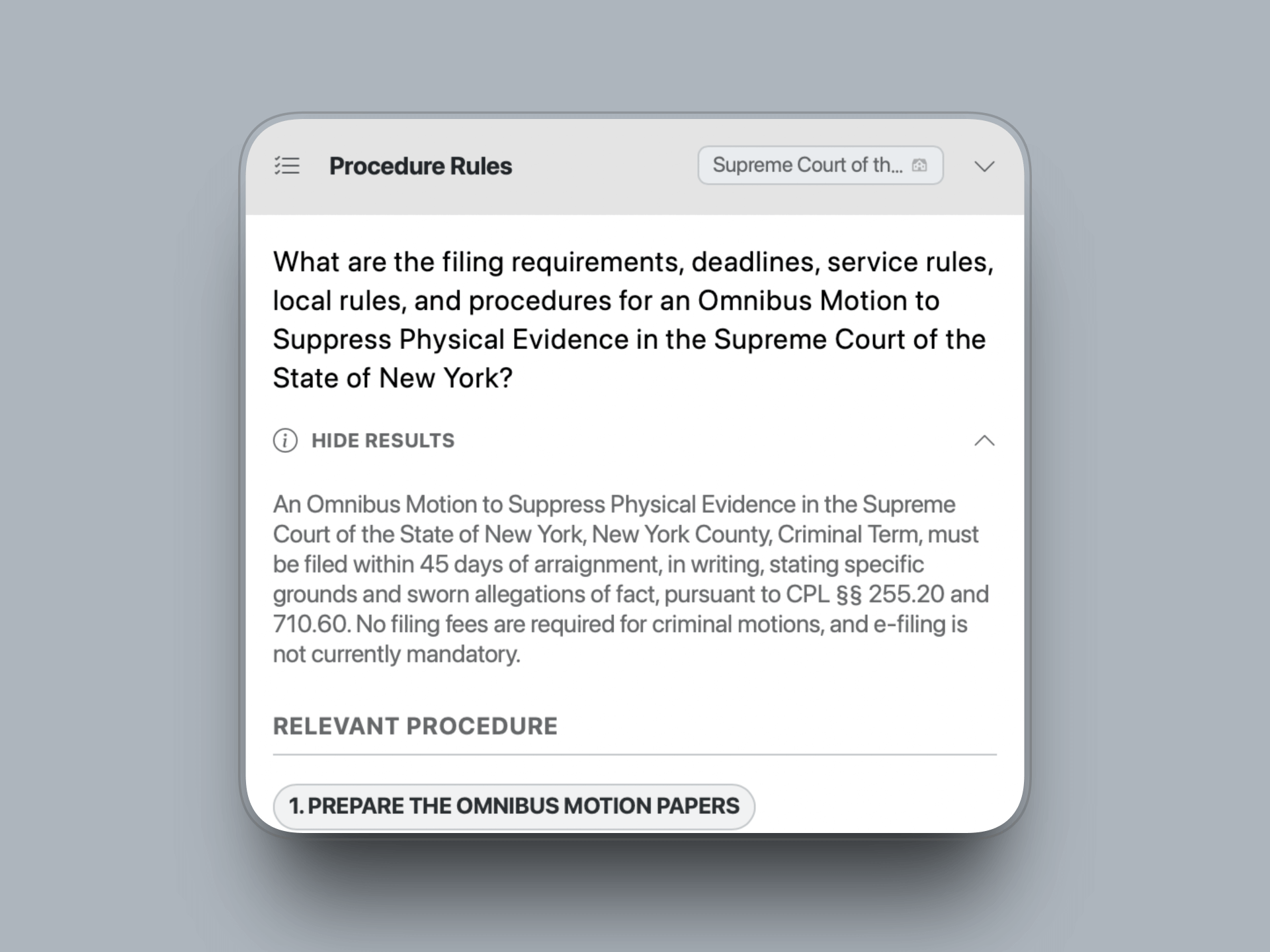
Procedural Intelligence
Rules vary by court, judge, and motion type.
- Court-specific rules for your motion type
- Local requirements (deadlines, notice)
- Meet-and-confer obligations
- Recent rule changes
📐
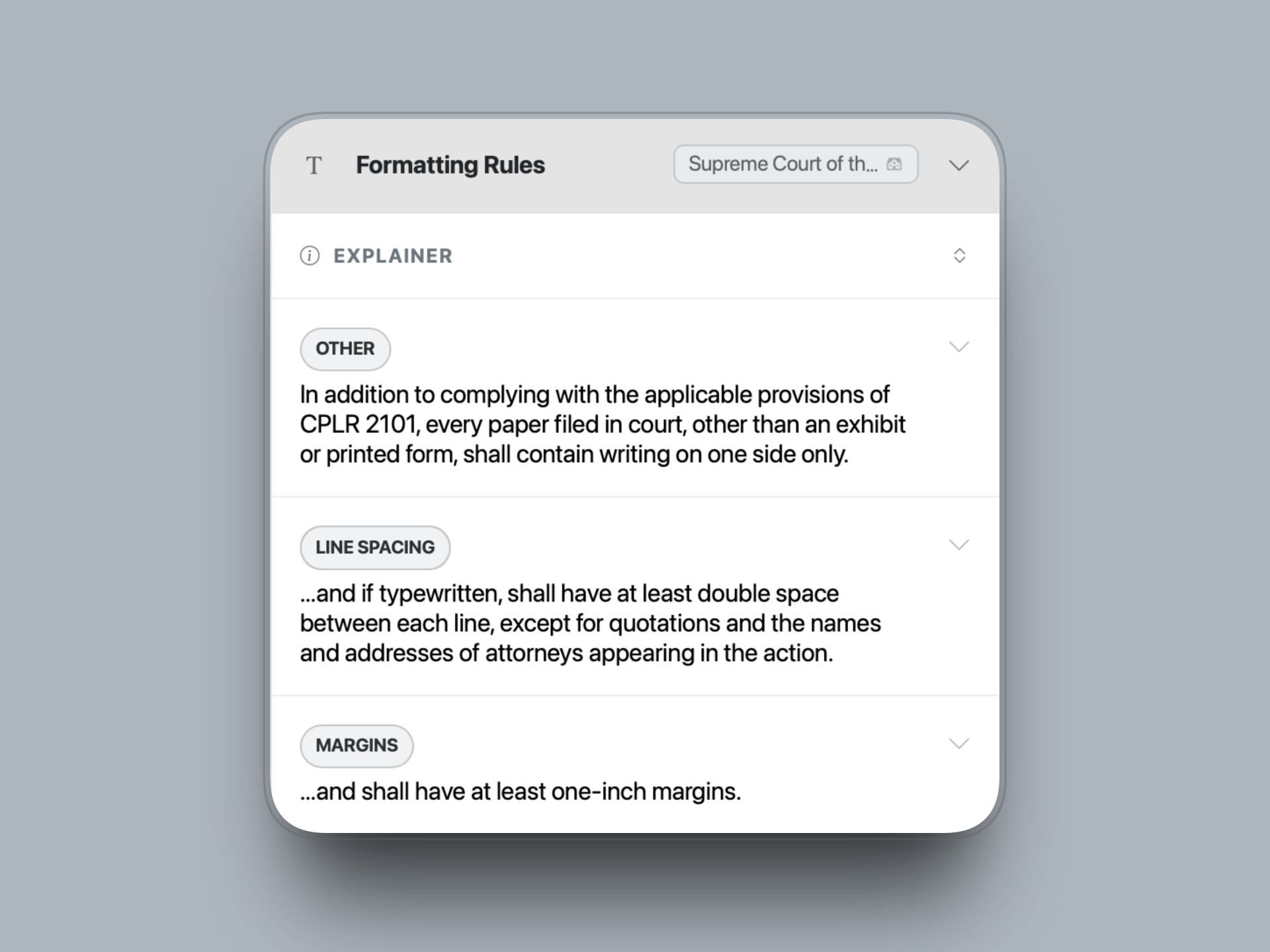
Formatting Requirements
The technical specifications for your court.
- Margins, fonts, spacing
- Page limits
- Header and footer specs
- Exhibit labeling requirements
Validate. Then perfect.
After validation, MotionValidator becomes your editing partner. Switch to Editor mode and refine your brief without leaving the platform. We worked with leading litigators to craft an AI assistant that doesn't just edit, it advocates, strengthens arguments, and elevates your brief's persuasive impact.
Highlight & Refine
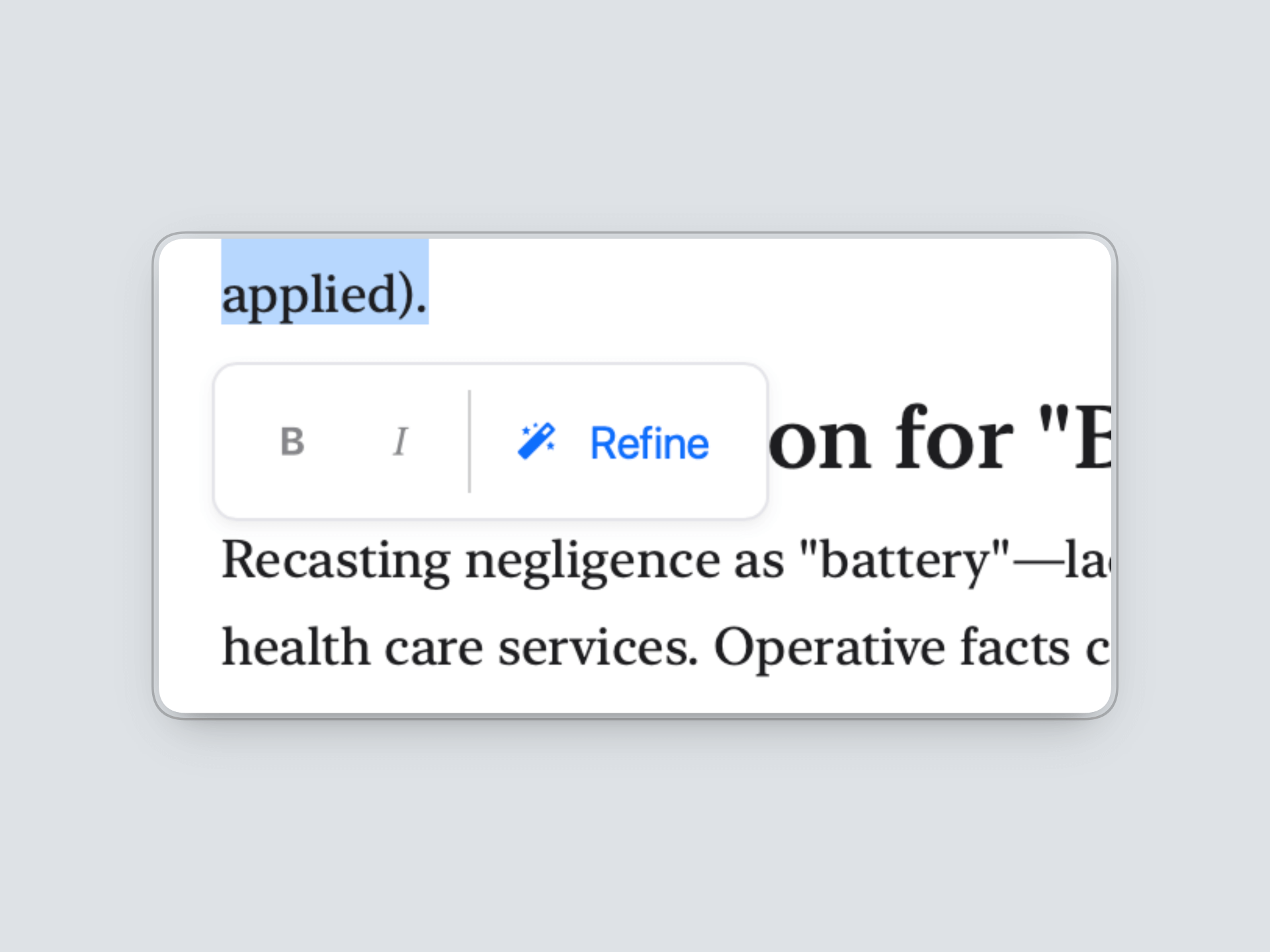
Select any passage and click "Refine" to receive expert-recommended improvements tailored to that specific section.
Smart Suggestions
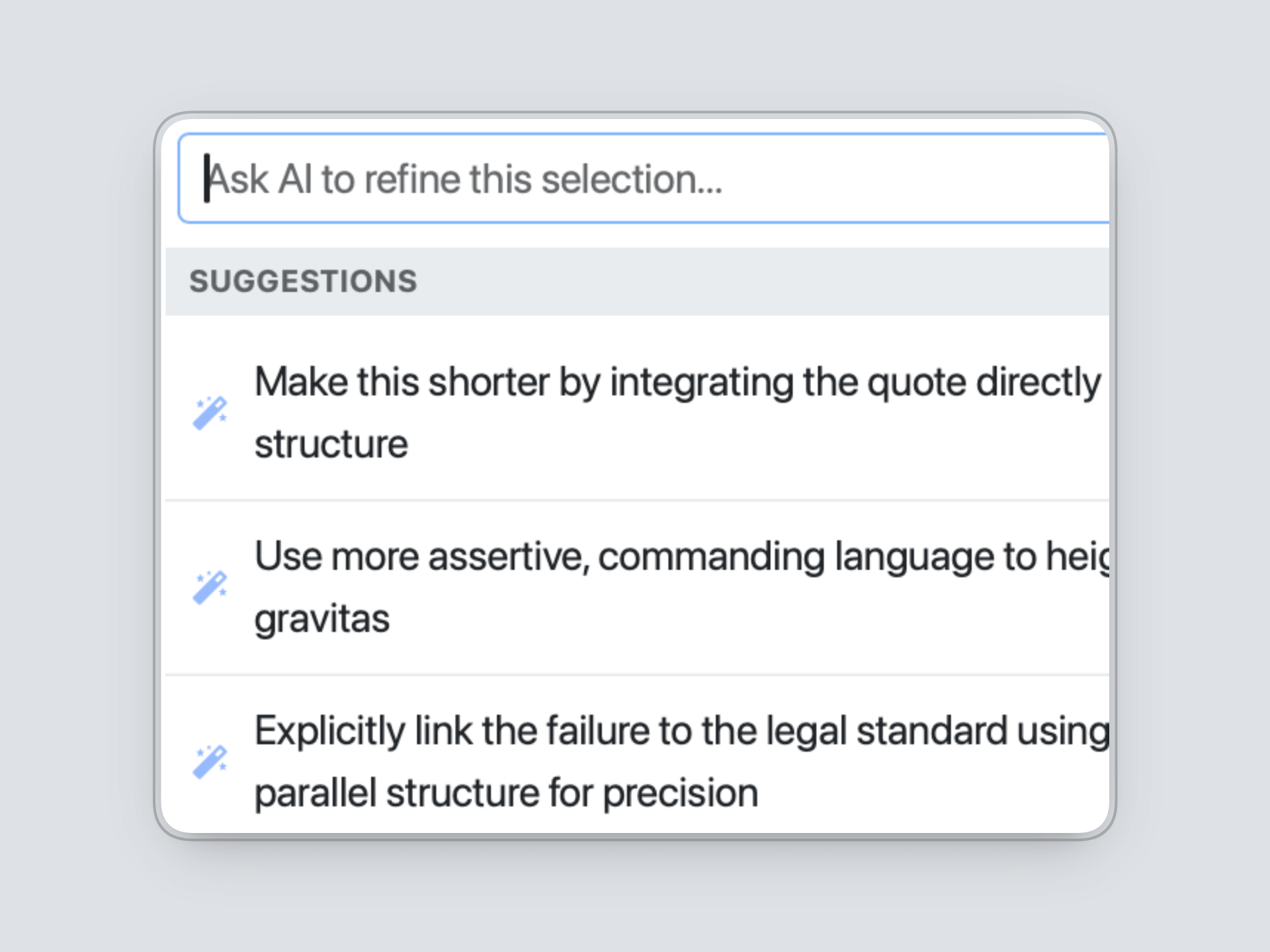
Get context-aware recommendations to strengthen arguments, integrate quotes more smoothly, or sharpen legal reasoning.
AI Chat Assistant
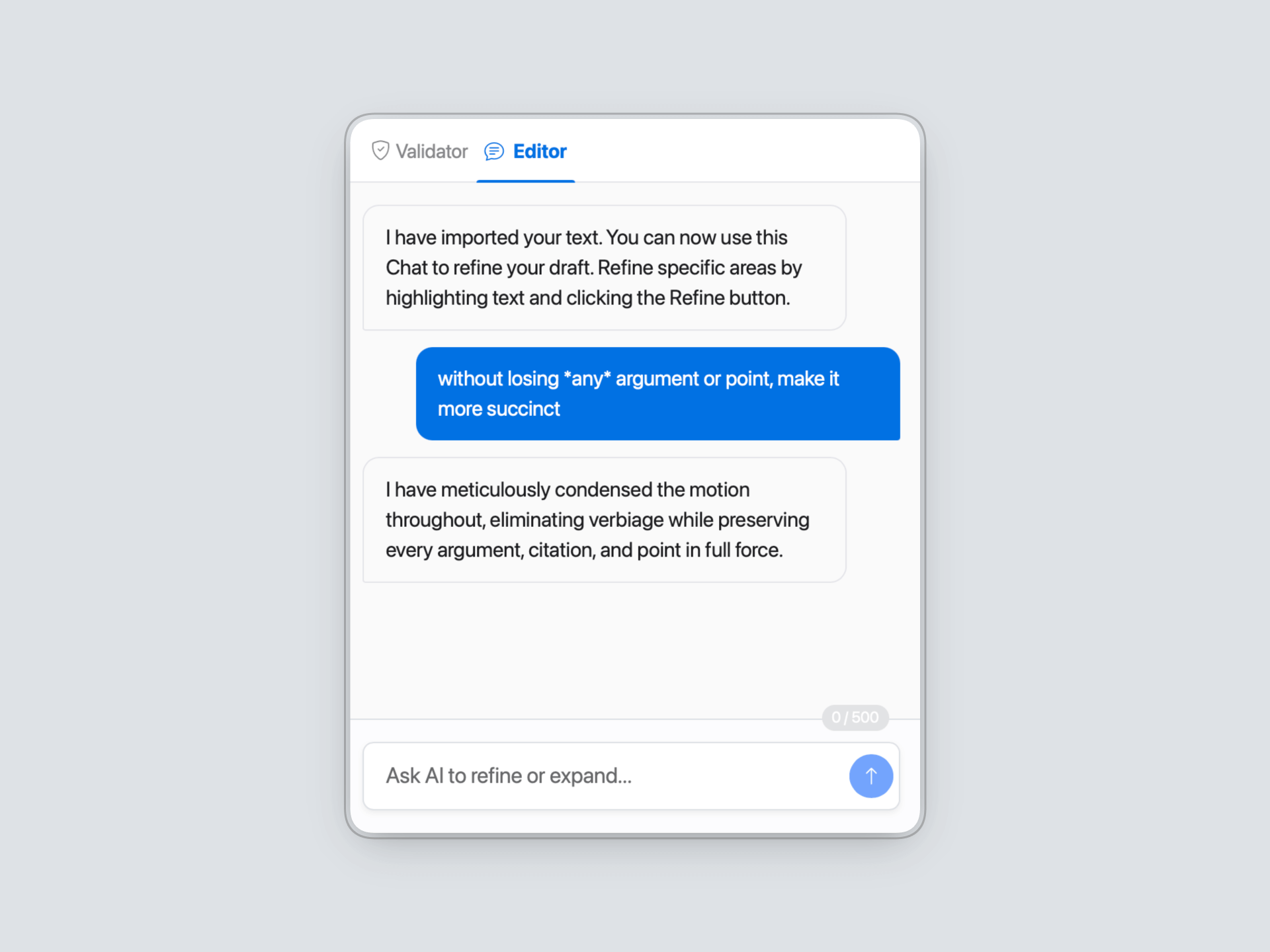
Use the chat function to modify entire documents or target specific sections with conversational commands.
The Citation Verification Report.
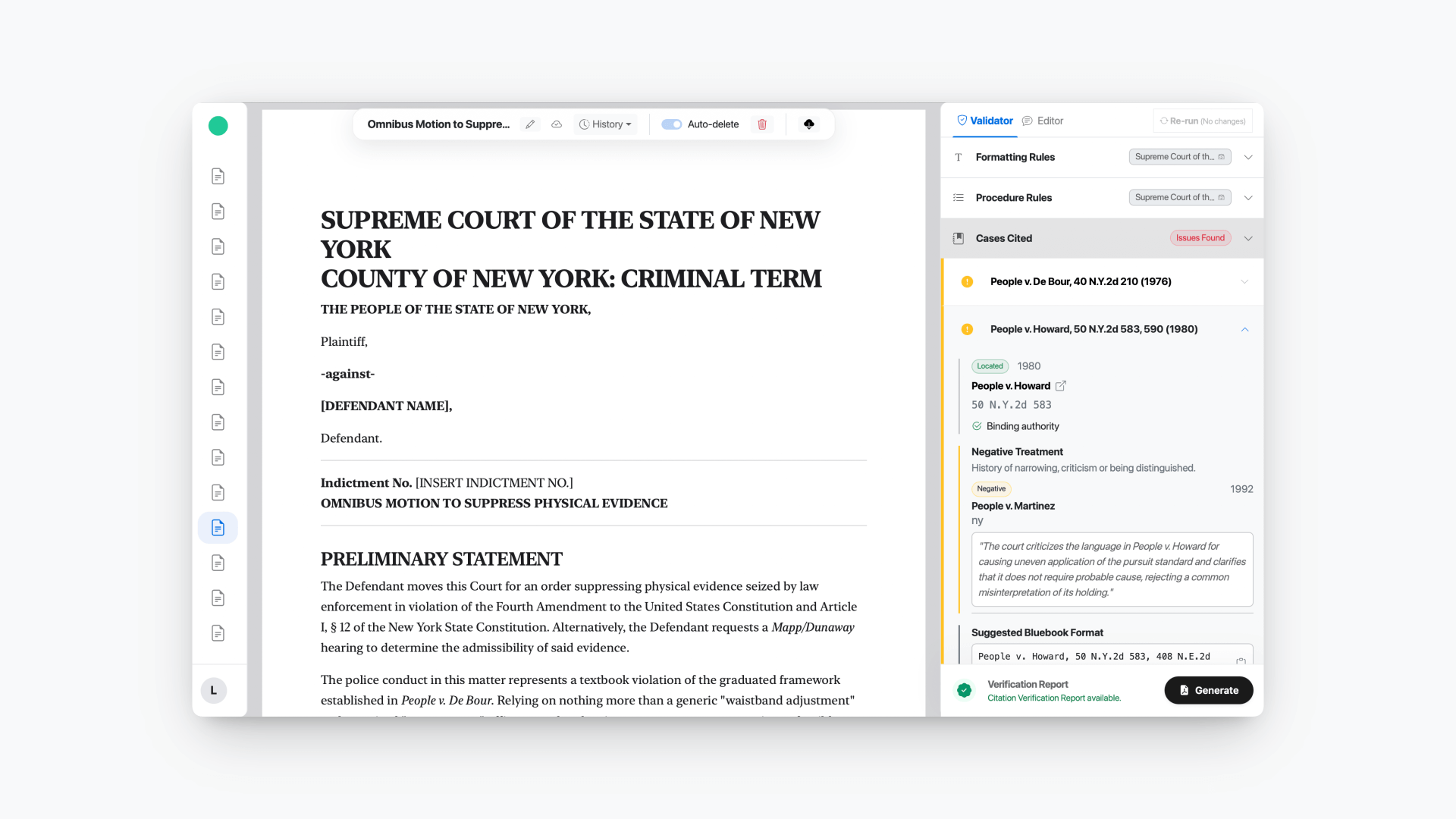
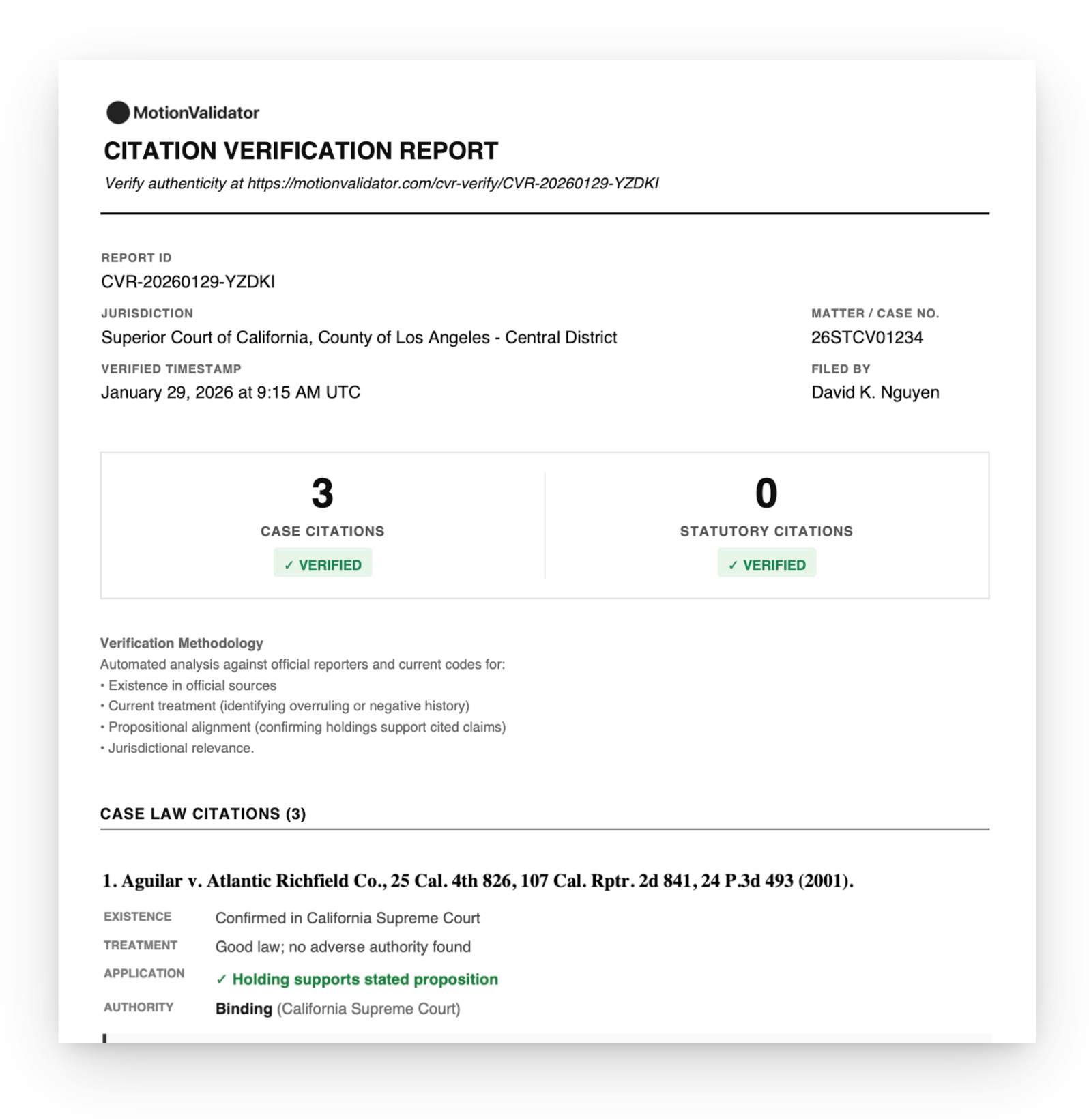
When your draft passes verification, MotionValidator generates a Citation Verification Report, a court-ready document listing every citation checked and what was verified.
Each citation shows its verification status: existence in official sources, current treatment, propositional alignment, and jurisdictional relevance.
For courts concerned about AI-generated filings, it's evidence of rigorous process. For your own practice, it's documentation that the work was done right.
Beyond "does this case exist?"
We verify the logic of your argument.
Every case citation is checked for validity, currency, and accuracy. But that's just the foundation.
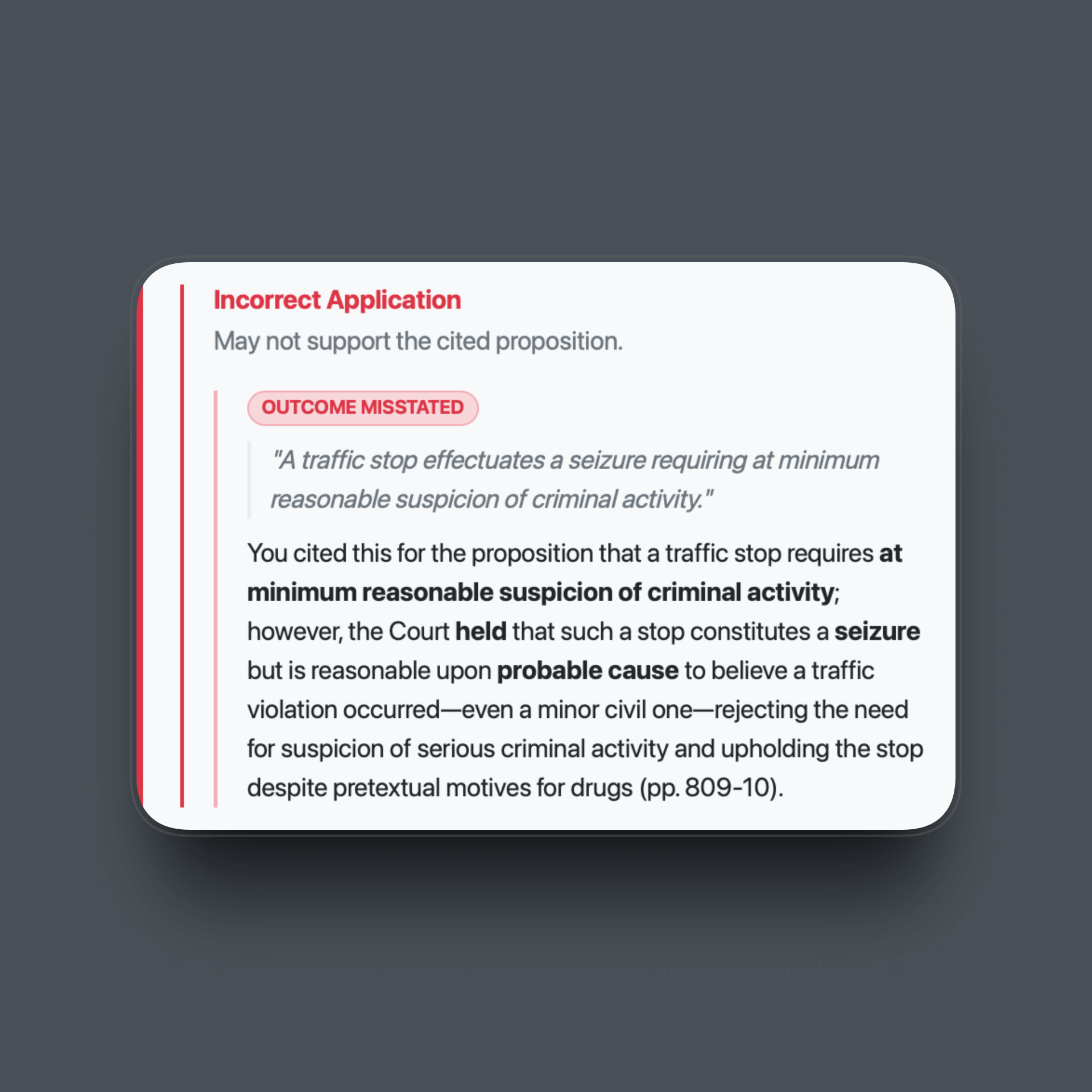
MotionValidator reads your motion and the authorities you cite to verify what matters most: Does the holding actually support your proposition? A real case, correctly cited, still good law - but fundamentally misapplied - undermines arguments.
Built on the framework that beat Westlaw.
In November 2025, Thomson Reuters demonstrated their new Deep Research AI with a seemingly simple question: Can a laboratory director's opinion be admitted as lay testimony?
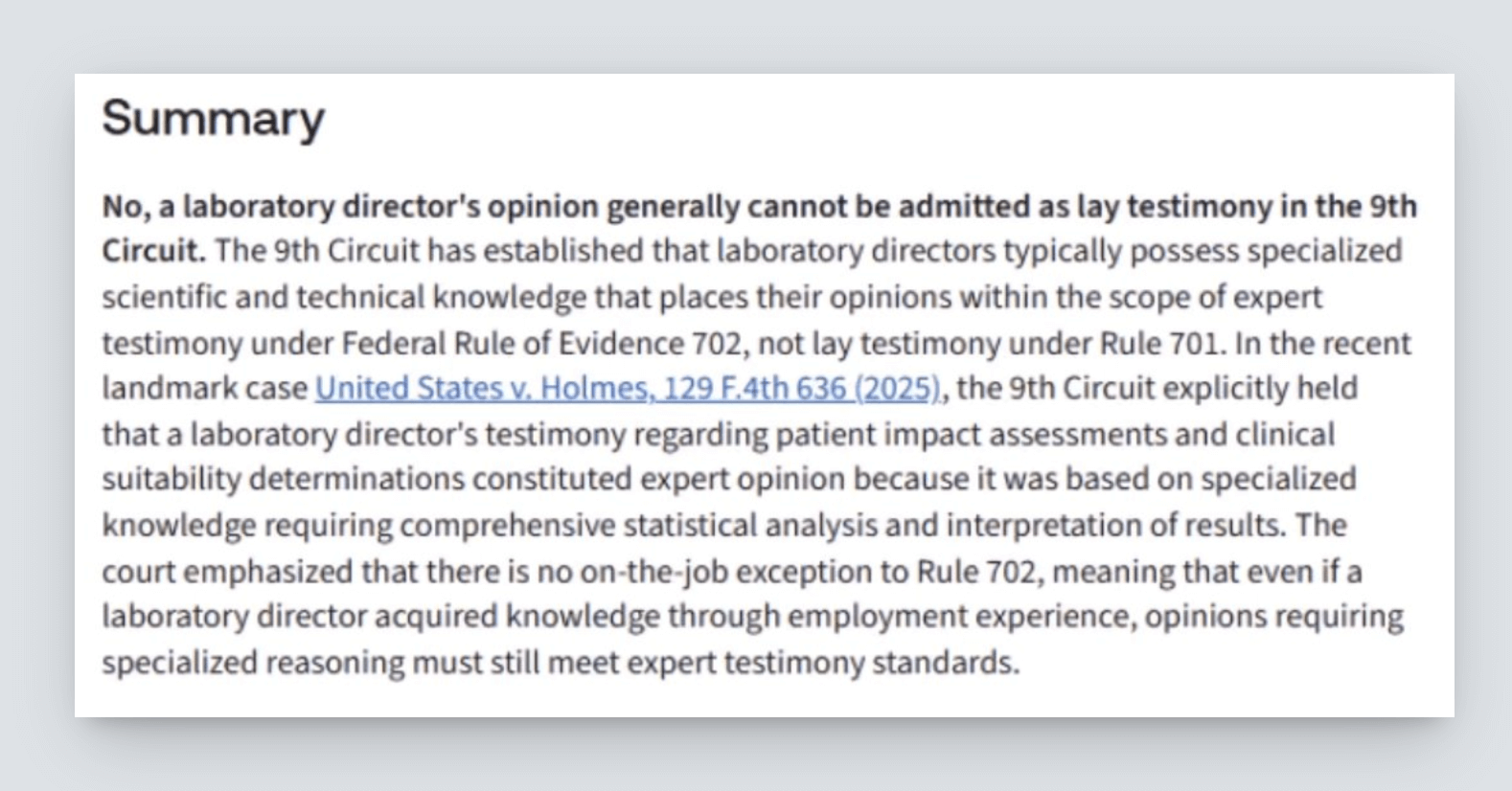
Westlaw cited United States v. Holmes and confidently answered "No," asserting that such testimony is generally inadmissible in the 9th Circuit. That interpretation is dangerously wrong.
While the court found the specific directors in Holmes offered expert opinions, it explicitly rejected any rule banning witnesses based on their job title or scientific subject matter. The actual holding applies a "functional test": opinions based on direct observation are admissible; those relying on specialized analysis are not.
Westlaw confused a single case outcome for a binding rule of law. A lawyer relying on this would unnecessarily concede admissible evidence.
We challenged the Citational Framework - which MotionValidator is built on - with the same task. It didn't just find the case; it correctly distinguished the holding from the rule. MotionValidator doesn't just retrieve text; it understands the legal boundaries that define it.
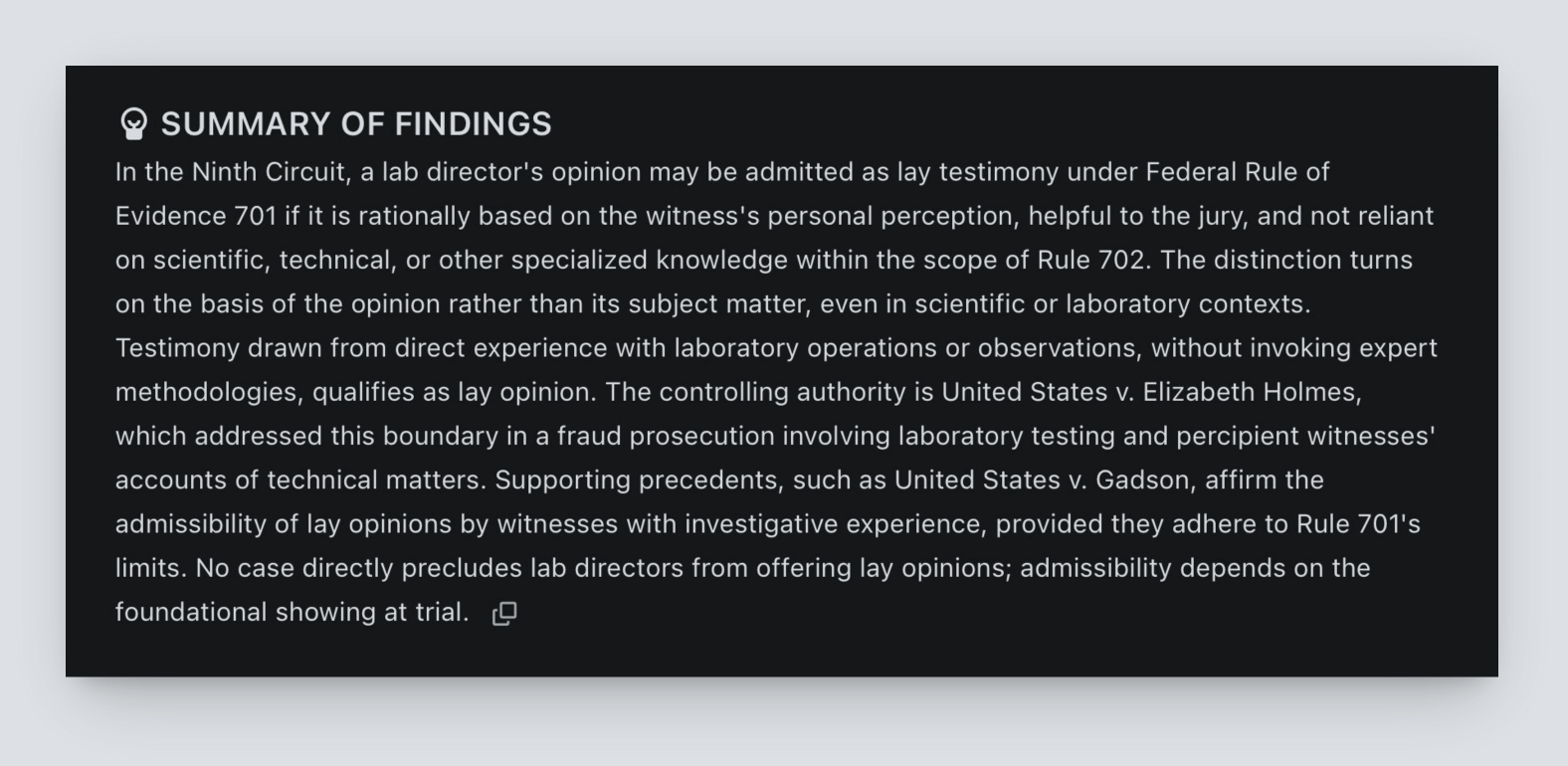
In the courtroom, mistaking a specific case outcome for a binding rule means surrendering valid arguments without a fight. Even the largest legal AIs fall victim to this interpretation error because they prioritize textual patterns over legal logic, confusing what did happen in one case with what must happen in all cases.
Not a platform. Not a suite. Not a migration.
No dashboard with 70 tabs. No workflow engine. Upload the motion. See what's wrong. Fix it. File.
Early access. Join the beta.
MotionValidator is currently in private beta testing with select litigators and partners.
If you are interesting in trying MotionValidator as part of our beta program, please email contact@citation.al.
Even in beta, our security and privacy procedures are in place, and are designed around SOC2 and ISO 27001 principles. Your work is private, protected, and privileged. For more information read our Security & Trust page.